
By Guest Blogger: Lee Flynn
The predominant culture often views those who value disaster preparedness as fanatical and irrational. Their predictions may sometimes sound apocalyptic; their preparations, drastic. The idea of an implosion of the national infrastructure and financial system simply strikes some as the stuff of fantasy. An honest look at the numbers, however, reveals that survival planning is actually a wise and prudent endeavor. In fact, academic research, practical business experience and good old common sense corroborate the very real possibility that such national and global dysfunction is real and growing more likely every day. Taking steps to ensure the safety of and provision for a family or community is a reasonable—and advisable—strategy.
Research
Over 40 years ago, researchers at the Massachusetts Institute of Technology predicted a severe resource shortage by 2030. Some scientists agree that the forecast is right on track. Meanwhile, numerous financial experts believe that the international debt bubble fueled by easy credit and inflated currencies will soon burst, leading to an even more intense recession and causing massive social unrest. While many are still bullish on the stock market, more sober-minded analysts see stocks soon losing over half their value. The increasing income gap and swelling national debt create an even more dangerous economic environment.
Economist Martin Feldstein, one-time Chairman of the president’s Council of Economic Advisors, believes that the current responses of the Federal Reserve Board of Governors are short-term fixes that will lead to higher inflation and higher interest rates in the future. Beyond that, artificially low rates relieve the pressure on the president and Congress to address the fiscal deficit. Although the Fed had previously held to a two-percent ceiling on inflation, Feldstein notes in the Wall Street Journal, it is now allowing that the limit will be exceeded. What can this mean for the financial and social future?
Higher inflation leads to, of course, higher prices. It bears noting that many news outlets will broadcast the “core inflation rate” that excludes food and energy from its factors. The reason behind this is that variables other than money supply (e.g. weather and geology) will affect the prices of these commodities. Yet these necessities are nonetheless subject to monetary policies, and are fundamental to survival should hard times come in the wake of economic meltdown. For this reason—and others—the importance of building a comprehensive survival kit in advance cannot be overstated. Should scarcity and desperation hit American shores, those with the foresight to store and courage to defend will fare better than others.
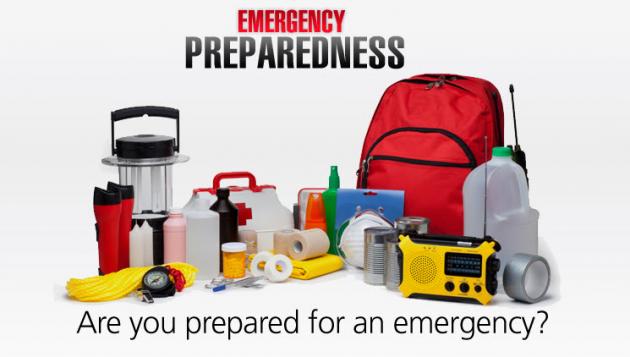 A survival kit adequate to a future financial implosion will be more than what might be found in a backpacker magazine. Stockpiling dried foods, for example, is preferable to cans and jars in that these foods use less space. Storing one gallon of water per day for each person and pet in the household is essential for survival. A two-week supply of food and water should be saved at a minimum. Commercially bottled water is likely the safest option for storage. In addition, thorough preparation will account for the storage of a gasoline reserve. Whether for an emergency generator or for extended travel, gasoline should be stored below 70 degrees in appropriate fuel cans—the larger the better—and supplemented with additives that preserve potency and slow evaporation.
Protection of supplies and loved ones during times of desperation and social unrest is crucial. For an all-purpose firearm, the 9mm handgun is widely acknowledged as effective and easy to use. Consequently, no survival kit is complete without lots of 9mm ammo. Unfortunately, recent years have seen unprecedented ammunition purchases by government agencies and anxious gun owners, so time should not be wasted in obtaining a significant cache. Without sufficient protection, the hard work of acquiring and storing supplies becomes futile.
BIO: Lee Flynn is from the Wasatch Mountains near Salt Lake City, UT. Through small local workshops and articles, Lee trains and teaches others on home preparation, food storage techniques, wilderness survival and self-reliance. After obtaining a bachelor’s degree from the University of Utah, Lee moved to the Salt Lake Valley where he now lives with his wife and daughter.
Popular Questions
What is the fastest way to improve Don’t Wait to Build Your Survival Kit without making beginner mistakes?
The fastest way to improve Don’t Wait to Build Your Survival Kit is to simplify the process and control one variable at a time. Start with the most important baseline: define the goal, identify the main failure point, and test one change before making another. Keep short notes so you can connect the outcome to the adjustment you made. This prevents guesswork and helps you build a repeatable method instead of chasing random fixes.
What should you check first when Don’t Wait to Build Your Survival Kit is not working well?
Check the most immediate bottlenecks first: setup errors, missing inputs, bad timing, or inconsistent follow-through. Before buying anything new or changing the whole system, confirm that the basics are being done correctly and consistently. A small diagnostic checklist usually reveals the real problem faster than broad trial and error. Once the weak point is clear, make one correction and watch the result before adjusting anything else.
What common mistakes make Don’t Wait to Build Your Survival Kit harder than it needs to be?
The most common mistakes are changing too many variables at once, skipping the basics, and judging results too quickly. Many people also copy generic advice without adapting it to their exact situation, which leads to weak results and confusion. A better approach is to work from a simple baseline, make measured changes, and give each change enough time to show whether it helped. That makes progress easier to track and repeat.